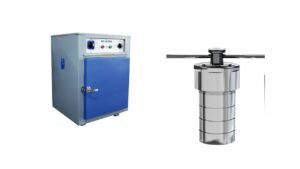
Laboratory incubators are essential pieces of equipment used in microbiology, biotechnology, pharmaceuticals, healthcare, and research laboratories. They provide a controlled environment with specific temperature, humidity, and atmospheric conditions required for the growth and maintenance of microorganisms, cell cultures, and biological samples. By maintaining stable environmental conditions, laboratory incubators ensure accurate experimental results and support various scientific and industrial processes.
What is a Laboratory Incubator?
A laboratory incubator is a temperature-controlled chamber designed to create ideal conditions for the growth and development of microorganisms, bacteria, fungi, cells, and tissue cultures. These devices are widely used in laboratories where precise environmental control is necessary for biological and chemical experiments.
Laboratory incubators can maintain temperatures ranging from slightly above ambient temperature to around 80°C or higher, depending on the model and application. Advanced incubators may also regulate humidity levels and carbon dioxide concentrations for specialized research.
Working Principle of a Laboratory Incubator
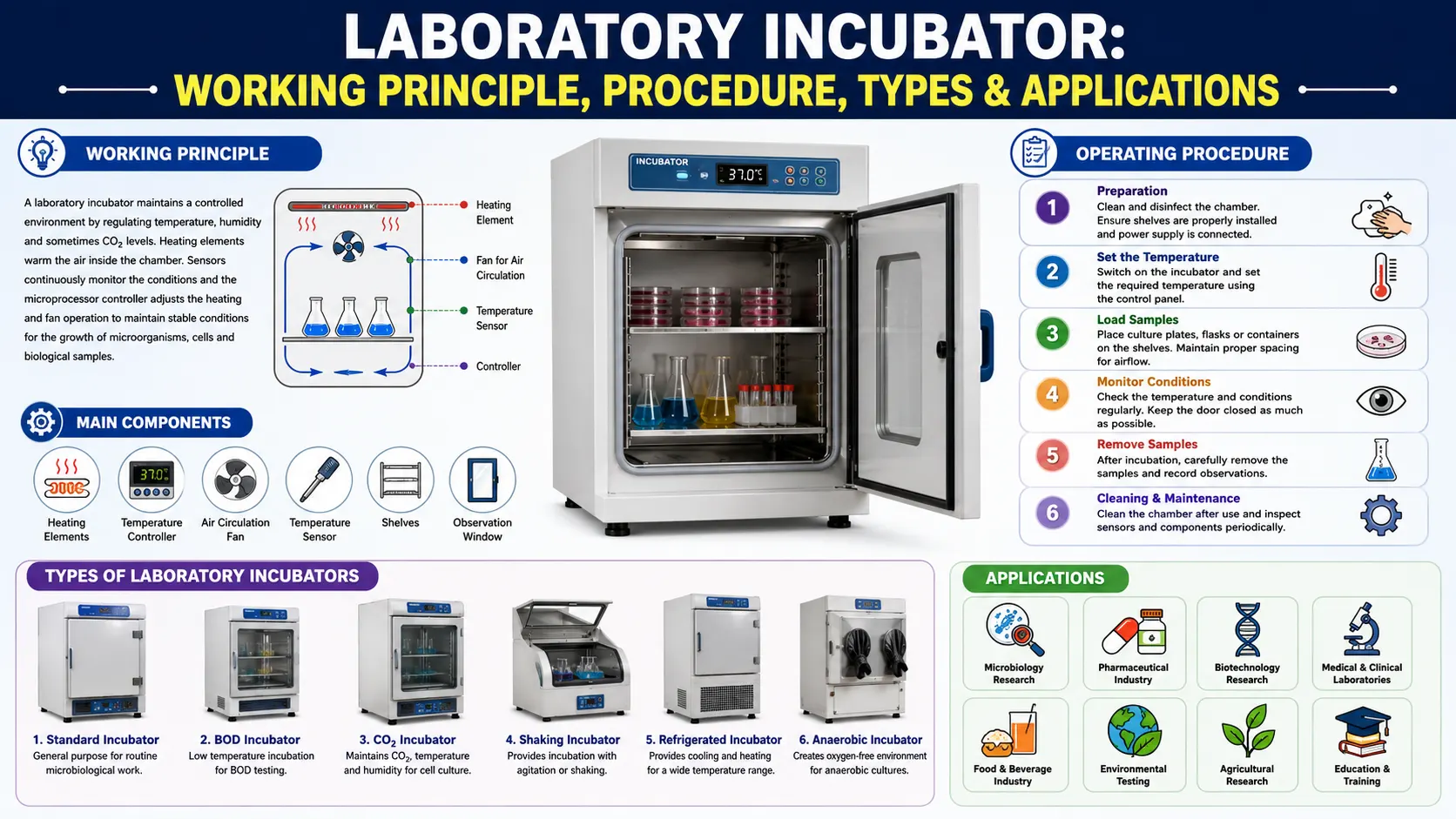
The working principle of a laboratory incubator is based on maintaining a constant and controlled environment suitable for biological growth and experimental procedures.
The incubator contains heating elements that generate heat within the chamber. A temperature sensor continuously monitors the internal temperature and sends feedback to the control system. When the temperature falls below the set value, the heating element activates automatically. Once the desired temperature is reached, the controller regulates the heating process to maintain stability.
The basic components involved in the operation include:
- Heating elements
- Temperature sensors
- Thermostat or microprocessor controller
- Air circulation fan
- Insulated chamber
- Shelving system
The air circulation fan distributes heat evenly throughout the chamber, ensuring uniform temperature conditions for all samples. Modern incubators use digital control systems for greater accuracy and reliability.
Incubator Diagram
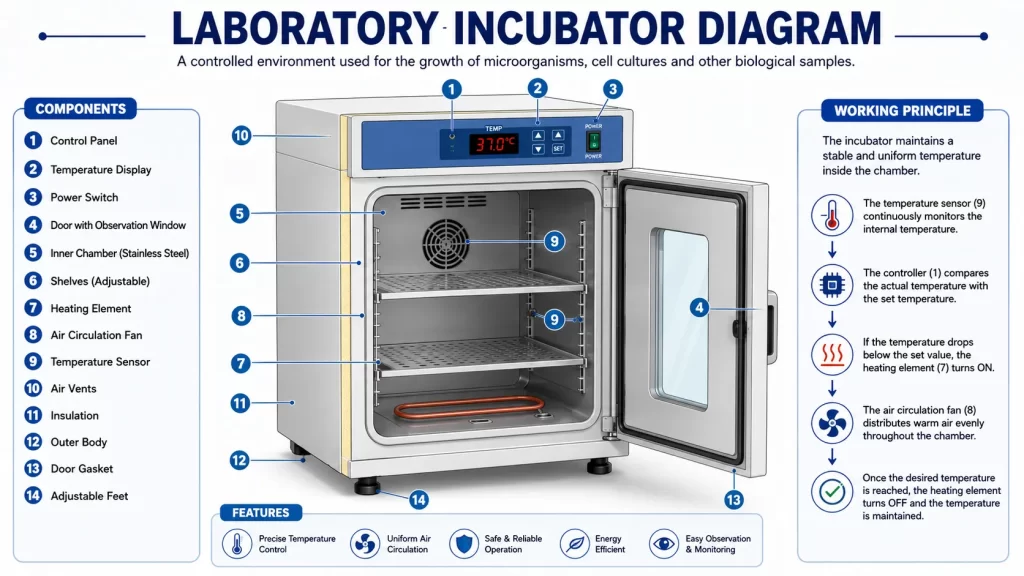
Main Components of a Laboratory Incubator
1. Insulated Chamber
The chamber is designed with insulated walls to minimize heat loss and maintain a stable internal environment.
2. Heating System
Electric heating elements generate heat according to the temperature settings selected by the user.
3. Temperature Controller
A digital controller monitors and regulates the chamber temperature with high precision.
4. Air Circulation Fan
The fan ensures uniform temperature distribution and prevents hot or cold spots inside the incubator.
5. Shelves
Adjustable shelves provide organized storage for petri dishes, flasks, test tubes, and culture plates.
6. Observation Window
Many incubators feature a transparent inner door or viewing window that allows monitoring without disturbing internal conditions.
Laboratory Incubator Operating Procedure
Proper operation of a laboratory incubator is important for maintaining sample integrity and obtaining reliable results.
Step 1: Preparation
- Clean and disinfect the incubator chamber.
- Ensure shelves are properly installed.
- Verify power supply connections.
Step 2: Set the Desired Temperature
- Switch on the incubator.
- Set the required temperature using the control panel.
- Allow the chamber to stabilize before placing samples.
Step 3: Load Samples
- Place culture plates, flasks, or containers on the shelves.
- Maintain adequate spacing between samples for proper airflow.
Step 4: Monitor Conditions
- Regularly check temperature readings.
- Ensure the incubator door remains closed as much as possible.
Step 5: Remove Samples
- After the incubation period is complete, carefully remove samples.
- Record observations and experimental results.
Step 6: Cleaning and Maintenance
- Clean the chamber after use.
- Inspect heating elements and sensors periodically.
- Calibrate the temperature controller according to laboratory standards.
Types of Laboratory Incubators
Different applications require different incubation environments. Several types of laboratory incubators are available to meet specific needs.
1. Standard Laboratory Incubator
This is the most commonly used incubator for bacterial cultures and routine laboratory work. It provides controlled temperature conditions without specialized atmospheric control.
Applications:
- Microbiology research
- Bacterial culture growth
- Educational laboratories
2. BOD Incubator
Biological Oxygen Demand (BOD) incubators maintain low temperatures for environmental and water testing applications.
Applications:
- Water quality analysis
- Environmental studies
- Wastewater treatment testing
3. CO₂ Incubator
These incubators maintain precise carbon dioxide levels along with temperature and humidity control.
Applications:
- Cell culture research
- Tissue engineering
- Pharmaceutical development
4. Shaking Incubator
A shaking incubator combines incubation and agitation functions.
Applications:
- Microbial fermentation
- Cell cultivation
- Protein expression studies
5. Refrigerated Incubator
These incubators provide both cooling and heating functions, allowing operation across a wider temperature range.
Applications:
- Microbiology testing
- Enzyme studies
- Food research
6. Anaerobic Incubator
Anaerobic incubators create oxygen-free environments for cultivating anaerobic microorganisms.
Applications:
- Clinical microbiology
- Bacterial research
- Pharmaceutical studies
Applications of Laboratory Incubators
Laboratory incubators play a vital role in numerous industries and scientific disciplines.
Microbiology Laboratories
Incubators provide ideal conditions for cultivating bacteria, fungi, and microorganisms used in research and diagnostics.
Pharmaceutical Industry
Drug development and quality control laboratories use incubators for microbial testing and cell culture experiments.
Biotechnology Research
Biotechnology companies rely on incubators for genetic engineering, tissue culture, and protein production studies.
Medical and Clinical Laboratories
Clinical laboratories use incubators to identify pathogens and perform diagnostic testing.
Food and Beverage Industry
Food manufacturers use incubators for microbial analysis, shelf-life testing, and quality assurance programs.
Environmental Testing
Environmental laboratories utilize incubators for water quality assessment, BOD analysis, and pollution studies.
Agricultural Research
Incubators support plant tissue culture, seed germination studies, and agricultural biotechnology research.
Advantages of Laboratory Incubators
Laboratory incubators offer several benefits that make them indispensable in scientific research and industrial applications.
Precise Temperature Control
Modern incubators provide highly accurate temperature regulation for consistent experimental conditions.
Improved Sample Growth
Controlled environments promote optimal growth of microorganisms and cell cultures.
Reliable Results
Stable incubation conditions reduce experimental errors and improve reproducibility.
Energy Efficiency
Advanced insulation and digital controls help minimize energy consumption.
Versatile Applications
Laboratory incubators can support a wide range of biological, chemical, and environmental studies.
User-Friendly Operation
Digital displays and programmable settings simplify operation and monitoring.
Safety Precautions While Using a Laboratory Incubator
To ensure safe and efficient operation, users should follow proper laboratory practices.
- Avoid overloading the chamber.
- Regularly disinfect the interior surfaces.
- Keep the door closed whenever possible.
- Monitor temperature calibration periodically.
- Use appropriate personal protective equipment (PPE).
- Follow manufacturer maintenance guidelines.
- Store samples securely to prevent contamination.
Conclusion
A laboratory incubator is a critical instrument used for maintaining controlled environmental conditions required for biological growth, scientific research, and industrial testing. Whether used in microbiology, biotechnology, pharmaceuticals, healthcare, food processing, or environmental laboratories, incubators ensure reliable and reproducible results by providing precise temperature regulation and stable operating conditions. Understanding the working principle, operating procedure, different types, and applications of laboratory incubators helps researchers and laboratory professionals select the right equipment for their specific requirements and achieve optimal experimental outcomes.